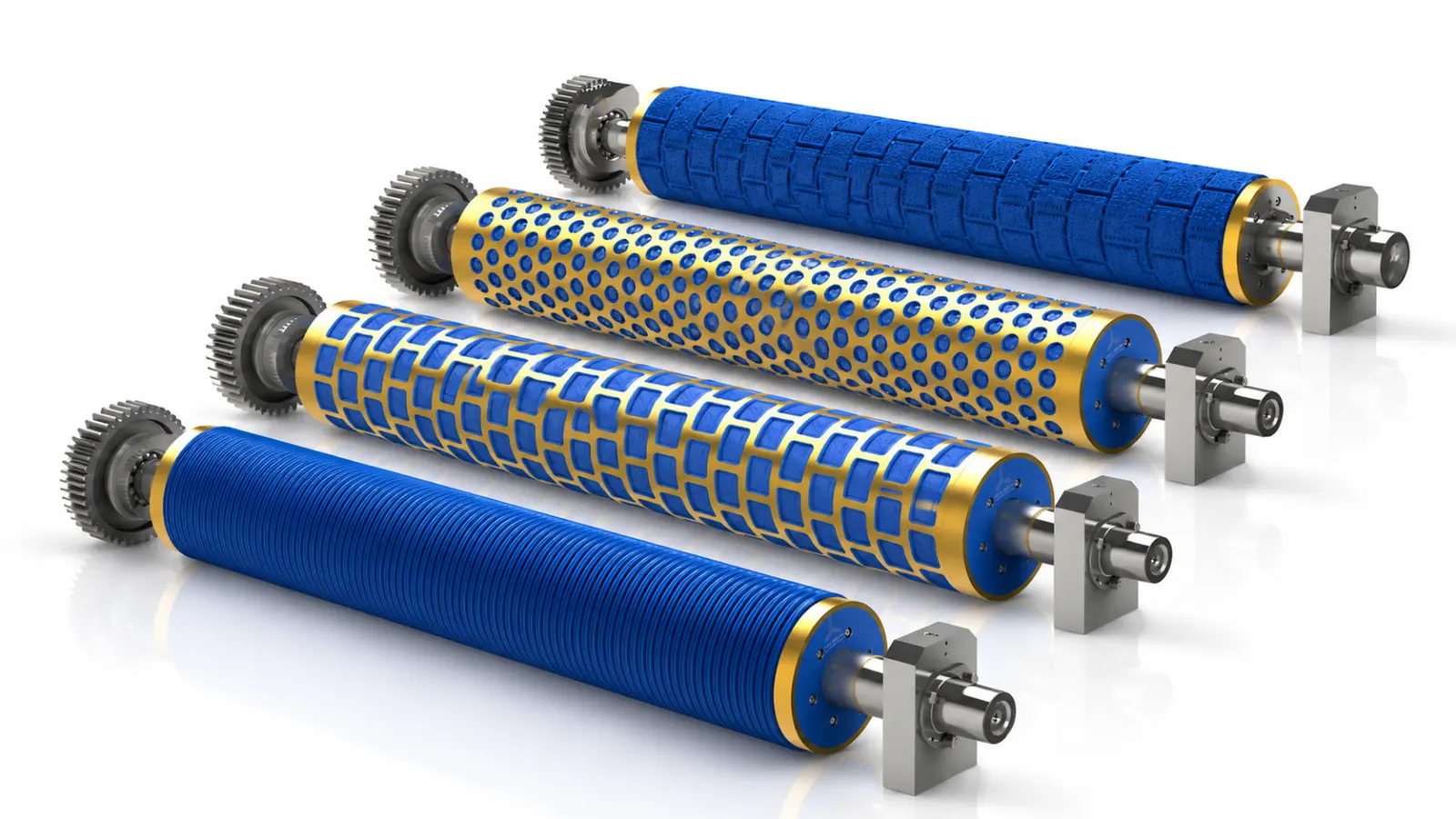
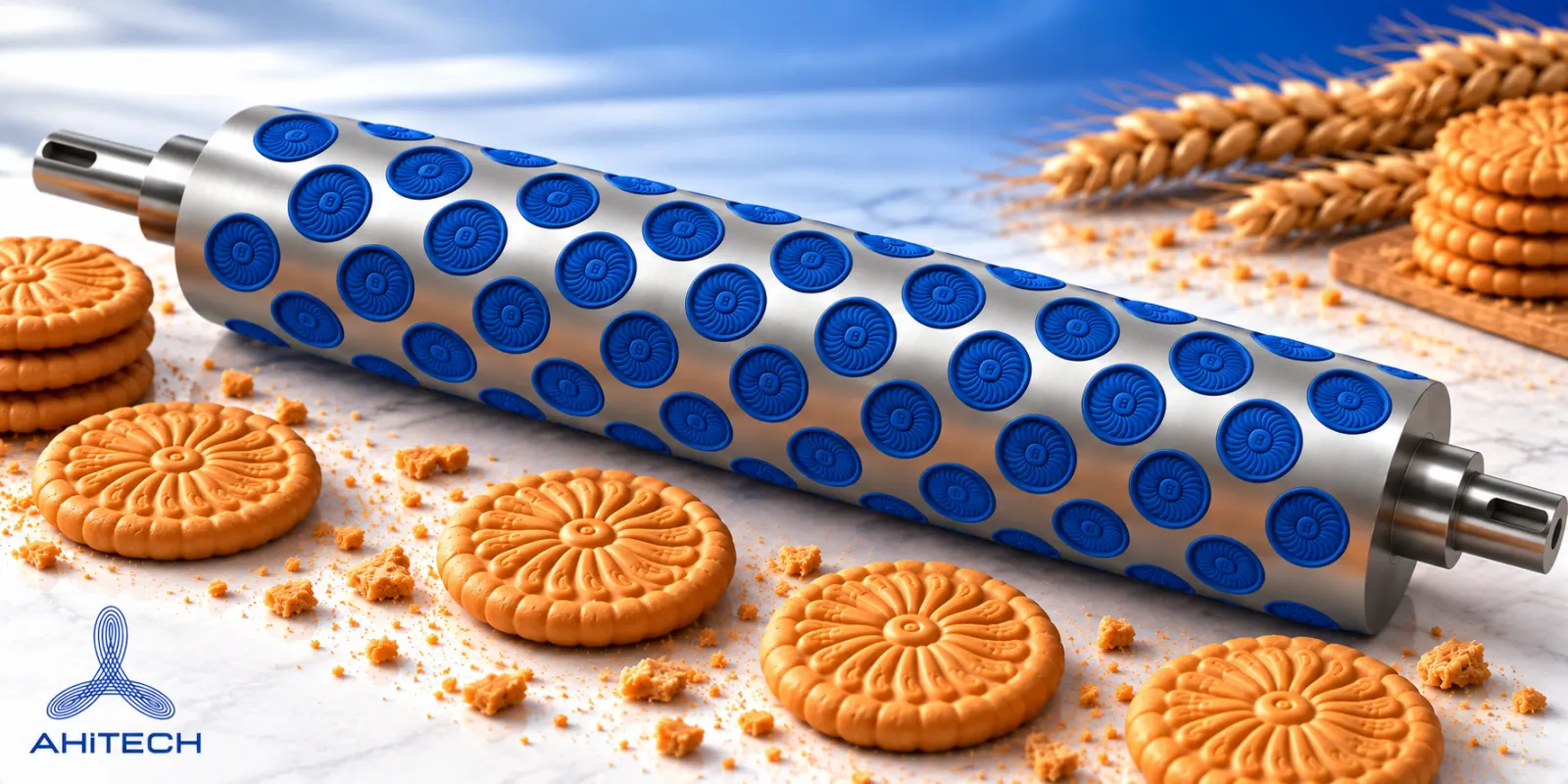
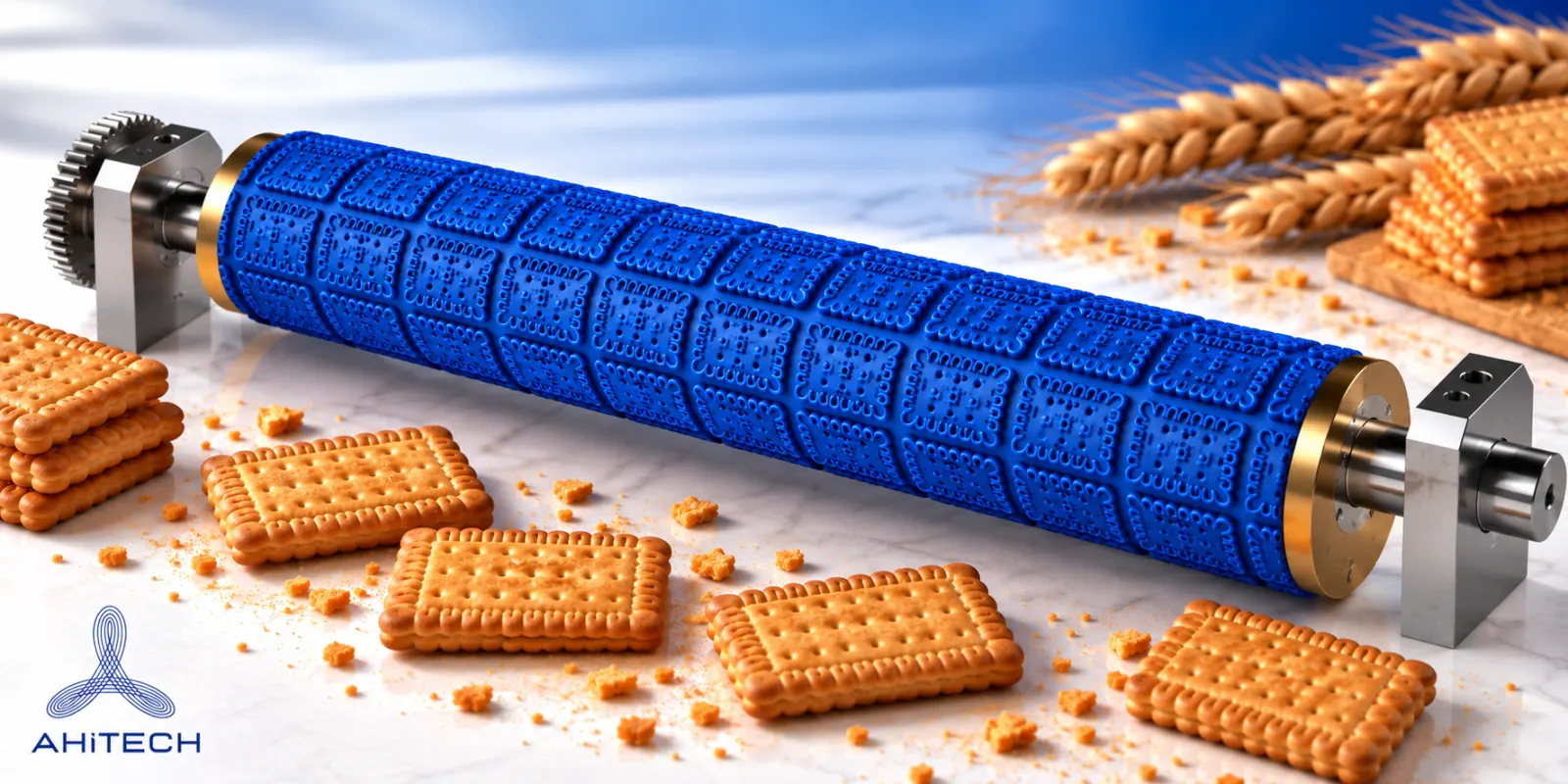
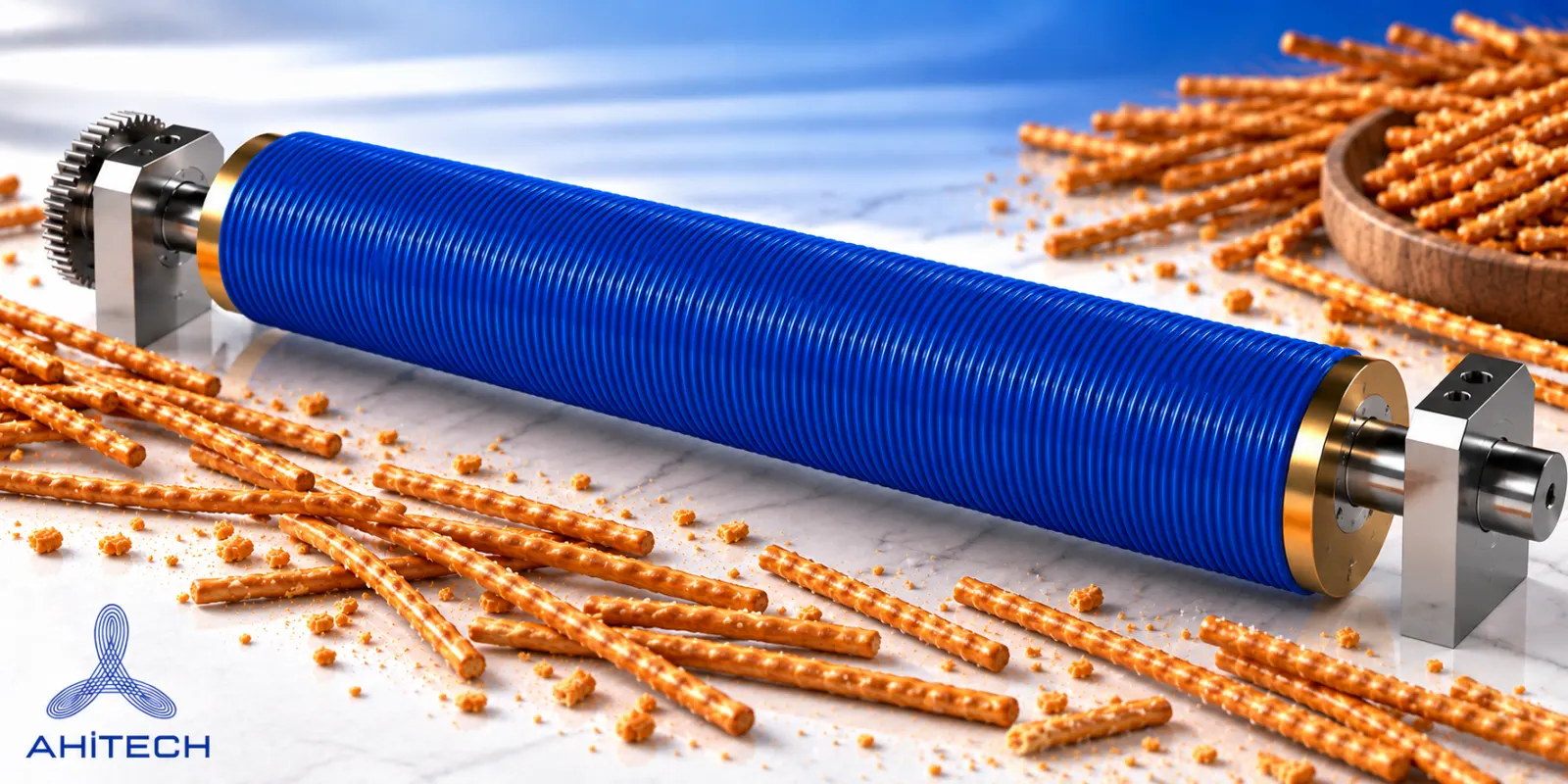
Tüm kalıplar

Rotary, cutter and cracker biscuit molds

Made in our Karaman workshop to the dimensions of your line: an RG7 bronze body, FDA-certified POM-C cavities and no more than ±2% weight difference between cavities.

Roll diameter
Ø150–Ø400 mm
Roll length
100–2000 mm
Weight difference between cavities
±2%
Certified POM-C cavity material
FDA

Your dough decides the mold

Soft dough is pressed into engraved cavities, hard dough is cut from a sheet, cracker dough is laminated and docked. We make a separate mold type for each.

Compare the three mold types

Parts of a rotary mold

Every part is machined to the dimensions of the line it will run on. Tap the numbers on the image or the titles in the list.

Rotary biscuit mold: gear, bronze body, POM cavities and shaft

From drawing to line: how a mold is made

Our molds are designed, machined and checked in our Karaman workshop. The photos are from our own machines.

  1. Design

    Design

    From sample to 3D model

    A 3D model is built from your biscuit sample or drawing; cavity depth, pattern and target weight are calculated here.

  2. CNC machining

    CNC machining

    Rotary-axis machine

    Cavities are machined on the mold body on CNC machines with a rotary axis.

  3. Pattern and engraving

    Pattern and engraving

    Logo, lettering, edge pattern

    Logos, lettering and edge patterns are cut into the cavities with fine tools; this is where the biscuit's surface is decided.

  4. Body and shaft

    Body and shaft

    Turned to size

    The bronze body is turned to size; shaft and bearing surfaces are machined to fit the housing on your line.

  5. Assembly and inspection

    Assembly and inspection

    Before shipping

    Cavities are fitted to the body, the mold passes a dimensional check and is packed ready to mount on your line.

Bronze-bodied biscuit mold being machined on a CNC machine

Bronze body, POM cavities: why both?

The body has to hold its dimensions for years; the cavities touch the dough. So we make them from different materials: machinable, corrosion-resistant RG7 bronze for the body, and food-grade POM-C that releases dough easily for the cavities.

Cutter cavities can be made in three ways: machined on bronze, machined on POM, or injection-moulded single cavities riveted onto the body. We choose together, based on your biscuit and your volumes.
Body
RG7 bronze
Cavities
MITSUBISHI Ertacetal C POM-C Blue 50
Food contact
FDA-certified material
Weight precision
±2% between cavities
Diameter
Ø150–Ø400 mm
Length
100–2000 mm

Send us your biscuit, we'll make its mold

This is all we need to prepare a quote. If something is missing, we'll work it out together.

  • A biscuit sample, drawing or clear photo Including any pattern, logo or lettering
  • Line and machine details Brand, model and the unit the mold goes on
  • Roll dimensions Diameter, length, shaft and gear dimensions
  • Target weight and dough type Soft, hard or cracker dough

Get a quote Message us on WhatsApp